ROE: What Your Safety Metrics Aren't Telling You
Rebecca Dhrimaj
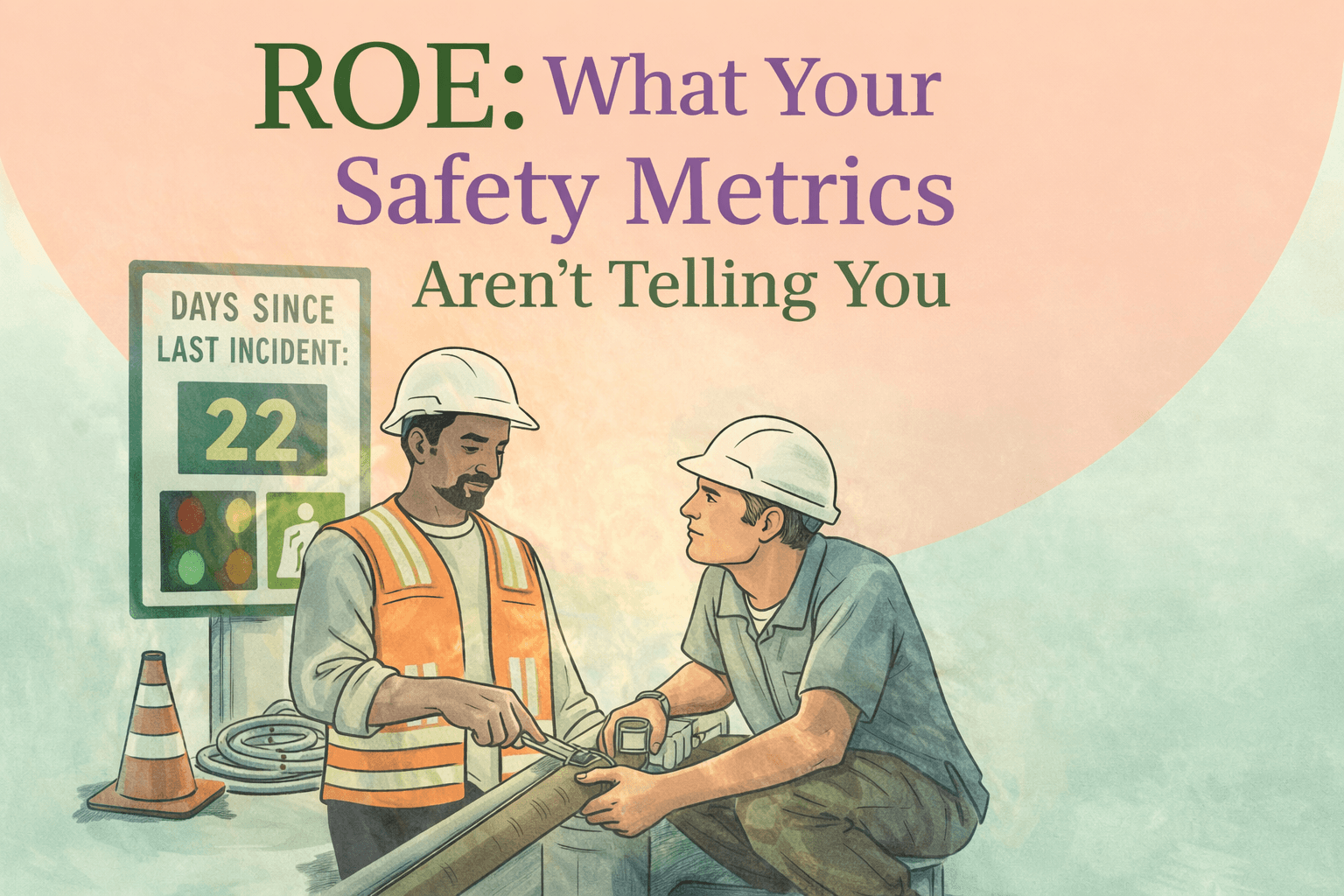
On paper, everything looks fine. The safety board is green. Procedures are followed. PPE is worn. And yet injuries still happen. Not because the rules weren’t clear. Not because people didn’t know better. But because something else was missing.
A Conversation That Happens Every Day
Recently, I co-facilitated workshops with safety leaders in the paper industry alongside my father, David A Galloway, who is a safety leadership consultant and author of the book Safety Talk, Safety Talk. We explored a scenario that felt familiar to almost everyone in the room.
A maintenance foreman, under pressure from management to reduce injuries, confronts one of his experienced mechanics taking a shortcut: holding a flashlight in his mouth instead of using proper lighting. What follows is a typical safety conversation: correction, a reminder of the rules, and a subtle threat of discipline.
On the surface, it makes sense. But underneath, something else is happening. The mechanic isn’t reckless. He’s making a trade-off.
His teammate had to leave to be with family
He wants to finish the job quickly
He forgot a tool and is improvising
He’s seen this behavior modeled before
And most importantly: he doesn’t feel safe enough to fully say any of that.
What Empathy Reveals That Compliance Misses
Before discussing the scenario, we asked the group to pause and do something different: imagine what it feels like to be in Charlie’s shoes before the conversation even begins. Not what he’s doing. Not what rule he’s breaking. Instead, we asked:
What is he thinking?
What pressures is he under?
What trade-offs is he making?
What is he not saying and why?
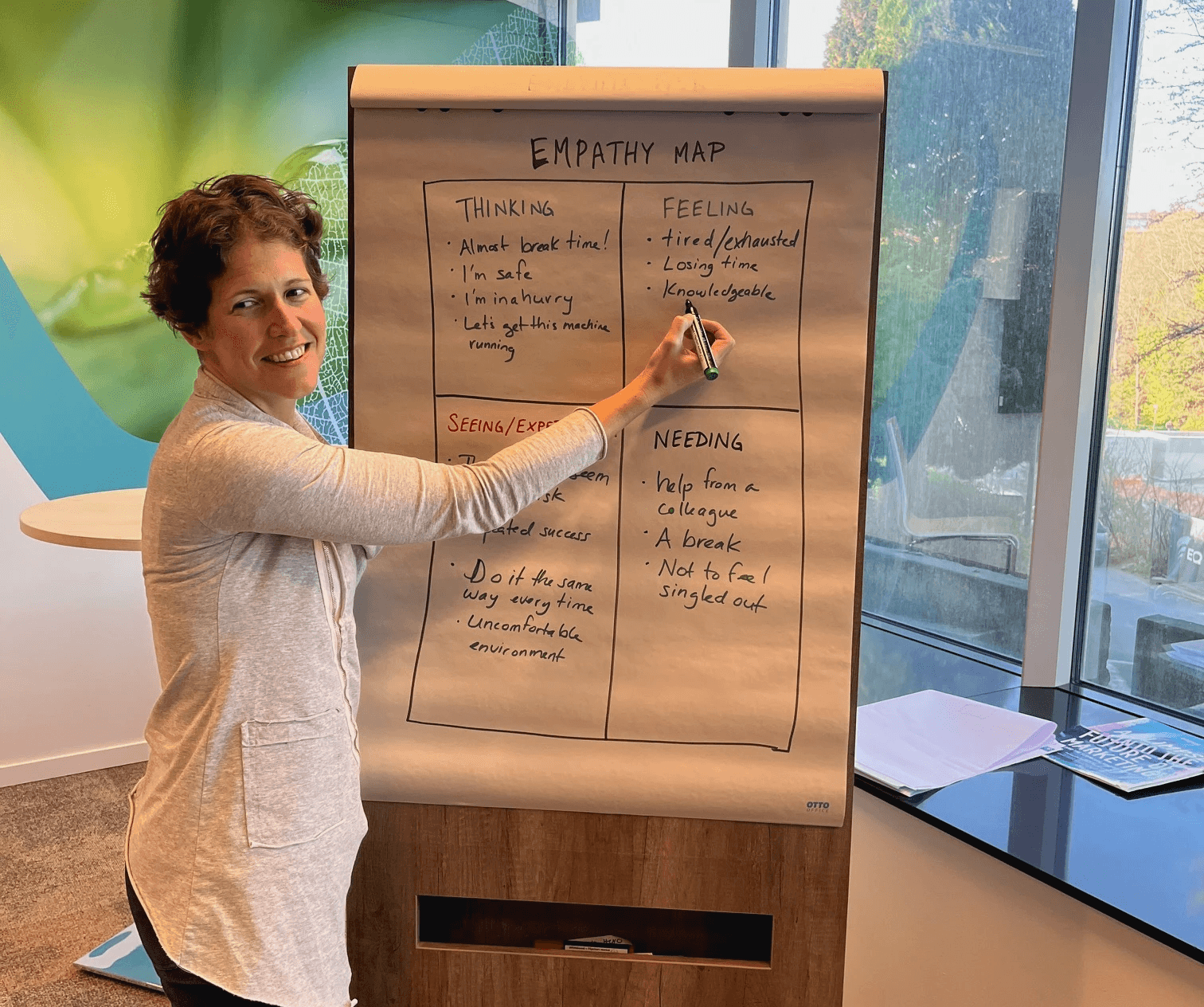
That empathy mapping exercise changed the conversation, because it surfaced something critical: Charlie’s behavior wasn’t the root problem. It was a symptom of time pressure, cultural norms ("we've all done it"), inconsistent modeling from leadership, and a learned calculation about when it's safe to speak up.
The Blind Spot
Most safety systems are designed to measure compliance. But compliance doesn’t tell you when people feel rushed, when they're improvising, when they're choosing between competing priorities, or when they've learned to stay quiet so they aren't "the nail that gets hammered down," to paraphrase an ancient Chinese proverb.
So leaders respond the only way the system allows them to: more reminders, more rules, and more enforcement. But here’s the tension: you can have high compliance and still be operating under risk, because the risk isn’t just in what people do; it’s in what they don’t say.
The Problem We Don’t Measure
In our forthcoming book, Return on Empathy, we describe a pattern we see across industries: leaders measure performance with increasing precision while losing visibility into how work is actually experienced. In safety-critical environments, that gap can be dangerous, because the most important warning signs (hesitation, pressure, trade-offs, workarounds) don’t show up on dashboards. They live in people’s heads. And in many organizations, they stay there.
From ROI to ROE
This is the gap Return on Empathy is designed to address. Traditional metrics, whether financial or safety-related, tell us what happened. They rarely tell us how the work was experienced, what it cost the people doing it, or what warning signs were missed.
Return on Empathy (ROE) expands how we think about performance. It asks:
Do leaders understand how their decisions impact people emotionally?
Are people able and willing to surface risk early?
Or have they learned to keep problems small, quiet, and contained?
When empathy is absent - not as emotion, but as understanding - leaders lose visibility. And when visibility is lost, risk doesn’t disappear. It goes underground.
A Different Starting Point
What we saw in those workshops was simple but powerful: when leaders start with compliance, they often miss the warning signs. When they start with empathy, they begin to see the system. Not just “what rule was broken?” but “what made that behavior make sense in the moment?” That shift doesn’t remove accountability, it improves it, because now you’re not just correcting behavior - you’re addressing the conditions that created it.
Why This Matters Now
Across industries, leaders are being asked to deliver more with less time, less margin, and more pressure. In those environments, empathy is often the first thing sacrificed, but that’s exactly when it matters most. Because under pressure, warning signs get weaker, silence increases, and blind spots widen.
The Invitation
As we launch our podcast (formerly E3: Engage and Empower with Empathy) under a new name Return on Empathy (ROE), this is the question we’ll keep coming back to:
What might you be missing because no one feels safe enough to tell you?
Not because people don’t care, but because they’ve learned over time when it’s worth speaking up and when it’s not. Because the most dangerous failures aren’t the ones that come out of nowhere. They’re the ones that were visible - just not to the people who needed to see them.
If this resonates, don’t let it stay theoretical. Start paying attention to what isn’t being said on your team this week. Then join us inside Return on Empathy (ROE)—where we explore how leaders learn to see what metrics can’t.
And if you’re ready to go deeper, join The Empathy Collective, our global community launching in June, where leaders come together to practice this in real time.
Sign up here to receive updates on the community launch.
*We are dedicating our Return on Empathy podcast to the late Bob Chapman, former CEO and Chairman of Barry-Wehmiller and co-author of Everybody Matters: The Extraordinary Power of Caring for Your People Like Family. We miss you, Bob, and we will continue to bring your vision to life.