Building the Bridge As You Walk On It: What Bob Quinn Taught Me About the Future of Leadership
Rebecca Dhrimaj
We are living in an era of "Future Shock." Between the rapid rise of AI, geopolitical turbulence, and a pervasive culture of fear-driven layoffs, modern leadership feels like walking through a storm.
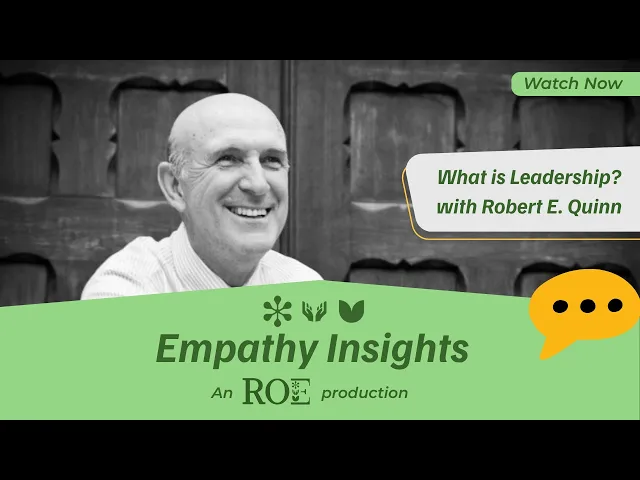
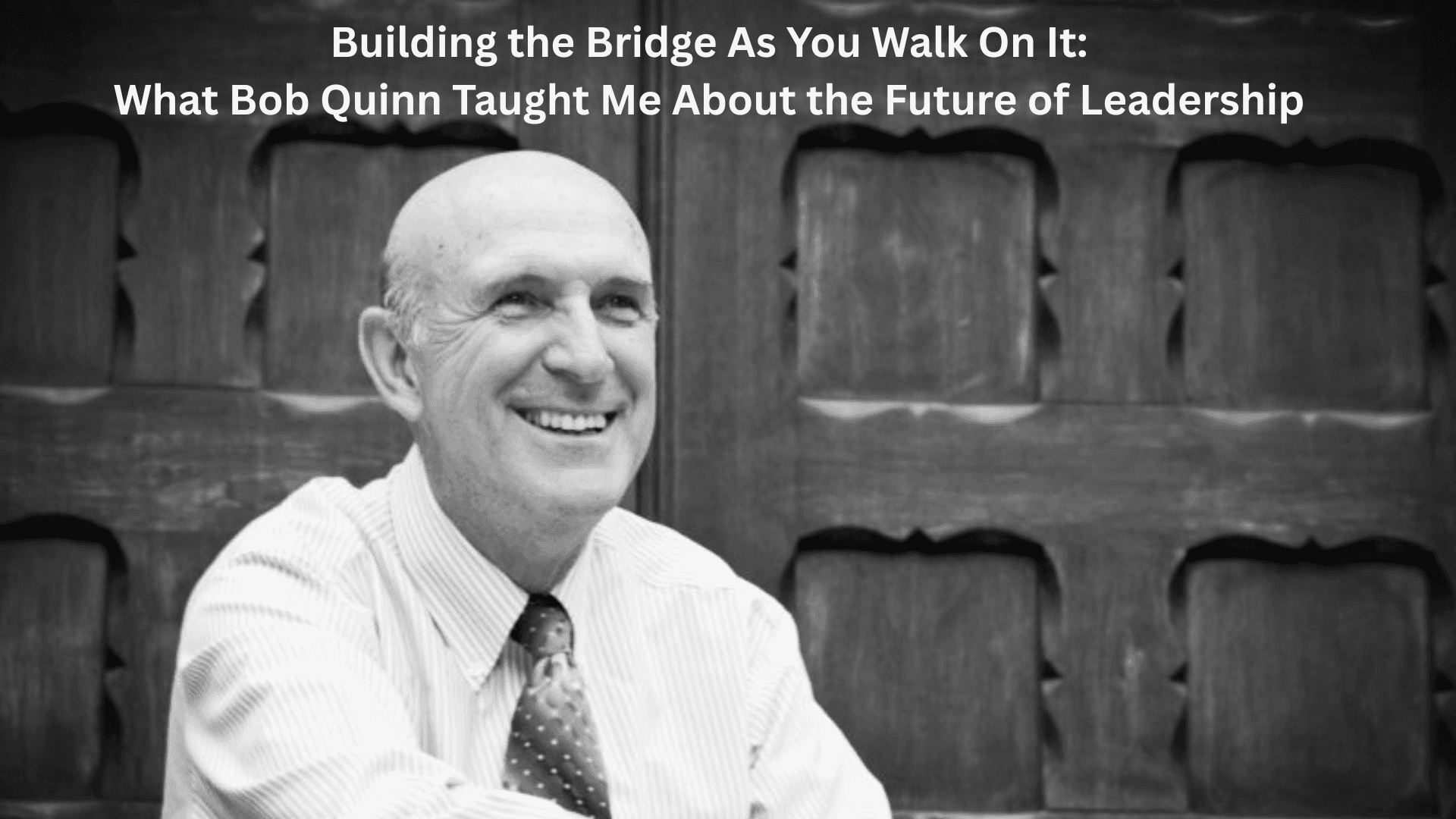
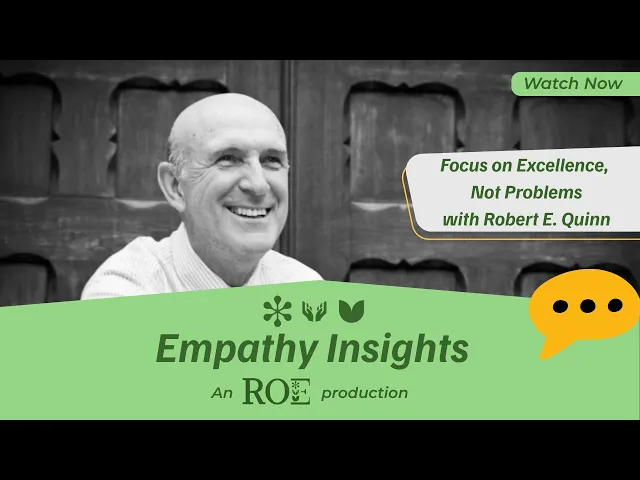
I recently sat down with Robert E. Quinn, Professor Emeritus of Management and Organizations at the University of Michigan - Stephen M. Ross School of Business and best-selling author of books like Deep Change and The Positive Organization, for a deep-dive series on Leadership Excellence. What emerged wasn't leadership advice, but permission to uncover one’s inner soul and challenge existing leadership norms.
If you are seeking to overcome the fear-driven disconnection from humanity in today’s workplace, here are the three core shifts we discussed to move from a state of fear to a state of excellence.
1. The First Shift: From Ego to Soul
In our first conversation, Bob shared a profound truth: "How the world responds to me depends on the condition I am in." Most of us lead from the "outside-in." We solve problems, react to threats, and fear the "eye-rollers" at the conference table. But excellence requires a "second birth": a moment where we surrender the ego’s need to be the expert and instead embrace a higher purpose.
In an interview I had with Hans-Werner Kaas, senior partner emeritus at McKinsey & Company and co-author of The Journey of Leadership: How CEOs Learn to Lead from the Inside Out, he shared multiple case studies where the most effective CEOs are the ones who hold up the mirror and ask the question, “who am I?”
Empathy Essential: Leadership isn't a position; it’s a state of being. To change your team, you must first change the "center of your soul."
In this clip from our interview, he talks about the fundamental state of leadership, and we reference the story of Mark C. Crowley, author of Lead from the Heart and The Power of Employee Well-Being, as an example of a leader who is constantly in an elevated state of being, leading from a place of excellence.
2. The Second Shift: From Problem-Solving to Purpose
Bob challenged the very foundation of modern management: the obsession with "problems."
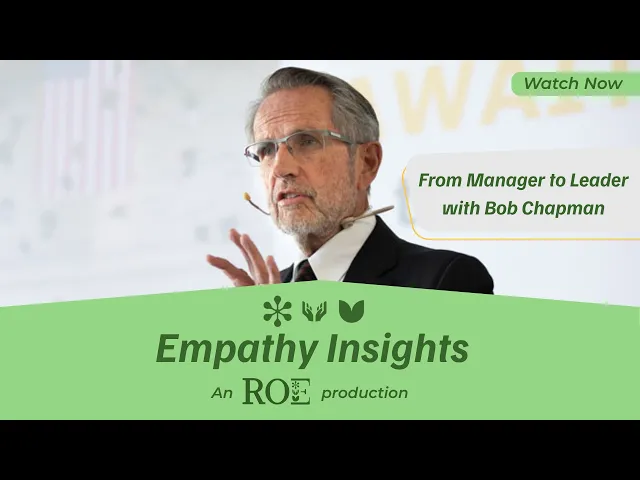
When we only focus on what’s wrong, we live in learned helplessness. We preserve the status quo because we are afraid of the eye-rollers. However, "Positive Deviants,” leaders like the late Bob Chapman (former CEO and Chairman of Barry-Wehmiller and co-author of the book Everybody Matters), don't just solve problems; they create excellence.
When I interviewed Bob Chapman before his death, he talked about the poverty of dignity in modern society. He referred to his employees as his “precious children.” He saw things other leaders couldn’t see because he had moved beyond conventional problem solving toward a vision for a better world.
Empathy Essential: Ask yourself the question that changes everything: “If crisis can produce excellence without leadership (remember the pandemic?), can leadership produce excellence without crisis?"
3. The Third Shift: From Transaction to Love
Our final episode was an emotional tribute to Bob Chapman. We discussed the "cost" of the conventional mindset. When we see employees as "headcount" or "functions," we strip humanity from our workplaces. We are seeing this happening in real-time with AI-driven layoffs, boosting bottom lines to invest in data centers rather than human systems. This is causing more harm to society than we think, in the name of short-term gains.
Bob shared a story of a CEO who had to lay off 25% of his staff due to a massive pullout of investor funding. The fired employees gave him a standing ovation. Why would these people celebrate the person who just fired them? Because he communicated the news with total transparency, vulnerability, and genuine tears.
In my interview with Meg Brown, COO at Cambridge Air Solutions, she recalled the time she first joined the company and her boss asked her, “how are you going to show love to this employee during this difficult conversation you are about to have?” Love is a common language that connects people - why aren’t we conducting business with love?
Empathy Essential: People are not objects to be managed; they are "someone’s precious child." When you lead with empathy and love, you don't just get "results,” you build collective intelligence.
Everyone is a Bob Chapman
Bob Quinn’s final message to me was simple: We are all "C students" who have the potential to be Bob Chapman, but you cannot make that journey alone. The system is designed to pull you back into the "conventional" way of leading: fear-based, reactive, and isolated.
That is why we are launching The Empathy Collective, an online community for leaders who want to lead change without losing their humanity, this July.
Excellence is a choice you make every morning, but it’s a choice that requires a crew of people who believe in you and your choice to lead differently. We are building a peer-to-peer mastermind for leaders who are ready to "walk naked into the land of uncertainty" together (as Bob Quinn would say).
Choose Your Path for July:
Path 1: The Connected Leader. Join our community and gain access to leaders who are navigating the same disruptions you are. You will also receive deeper insights from our ROE podcast guests like Bob Quinn.
Path 2: The Resilient Change Leader. Access the Resilient Change Leader program: a toolkit for operationalizing the "Deep Change" Bob describes.
Part 3: The Change Master. Join a 6-month Action Learning peer coaching cohort where you will practice excellence in real-time with a small, intimate group of leaders.
Click Here to Join the July Launch Waitlist
The bridge is built as you walk on it. Let’s start walking, together.
Resources:
The Twice-Born Leader with Robert E. Quinn (Return on Empathy podcast)
Leading Inside Conventional Systems with Robert E. Quinn (Return on Empathy podcast)
The Cost of Conventional Leadership with Robert E. Quinn (Return on Empathy podcast)
Leading with Heart in Hard Places with Meg Brown (Return on Empathy podcast)
The Power of Employee Well-Being with Mark C Crowley (Return on Empathy podcast)