Why Do Change Initiatives Fail?
Rebecca Dhrimaj

Ultramarathoner Scott Jurek once said, “we strive toward a goal, and whether we achieve it is important, but it’s not what’s most important. What matters is how we move toward that goal.” Endurance runners are accustomed to running distances well beyond the 42 kilometers of a standard marathon, and the preparation for these races is equally mental as it is physical. Although every runner has their eye on the prize (the finish line), these 10+ hour races require an intense focus on the journey toward the finish line. Even the best athletes encounter unexpected barriers throughout their race - rough terrain, unpredictable weather, injuries - but they are incredibly agile because they have been training for months.
"We strive toward a goal, and whether we achieve it is important, but it’s not what’s most important. What matters is how we move toward that goal." - Scott Jurek, professional ultramarathoner
Leading your organization through change, whether it’s incremental or radical, is not too dissimilar from an ultramarathon; it requires consistent training, discipline and endurance. In today’s fast-paced business environment, organizations must also adapt quickly to stay competitive. But most change initiatives never successfully cross the finish line. Why?
The VUCA (volatility, uncertainty, complexity, ambiguity) world we live in has created intense employee burnout. And the dizzying rate of change further stresses already depleted teams. Accenture's Pulse of Change 2024 Index revealed an 183% increase in the rate of change since 2019.
Change fatigue is ubiquitous. Willingness to support enterprise change initiatives has plummeted from 76% in 2016 to 43% in 2022, according to Cian O Morain and Peter Aykens, two senior researchers in Gartner’s HR practice.
We are in the era of the “Great Detachment.” With a weak job market and widespread layoffs, employees feel stuck with their discontent, unable to leave their employer for a new role. Although employee turnover rates may have decreased, employers face hidden organizational risks. These include decreased employee engagement, which can affect productivity, and potential talent pipeline issues in the future.
Leaders ignore the human side of change. There is so much focus on the change strategy and process that leaders often overlook (and underestimate the importance of) the human side of change.
What is the missing ingredient that will reverse this statistic?
Leaders don’t have to accept a 70% change initiative failure rate, and the missing ingredient is one that is accessible to us all and doesn’t cost a thing: collective empathy.
Collective empathy is the ability of an organization or team to understand and respond to the emotions, experiences, and perspectives of its members by prioritizing group belonging and empowerment over individual needs. It’s about creating a culture where everyone feels valued, heard, and supported, fostering a sense of shared purpose and collective responsibility. Organizations with high collective empathy are inherently resilient because people know they are part of something bigger than themselves, feel valued, and want to see their team and their company succeed.
Building a Collectively Empathetic Organization
After interviewing fifty business leaders (human resources leaders, C-Suite executives, small business owners, recruiters, professors, teachers, mental health professionals, leadership consultants, and more), I’ve identified three key pillars to cultivate collective empathy that will prepare any organization for change:
Psychological Safety: create an environment where your team can bring their best selves to work, sparking innovation and the ability to pivot.
Team Growth: engage in proactive conversations about your team’s career development and look for opportunities for individuals on your team to become advocates for change.
Two-Way Communication: field feedback chrome your team regularly, clearly defining the vision, mission and purpose of the change and how those align to the team goals while reinforcing what each team member needs to do to succeed in their roles.
Measuring Change Readiness: The Collective Empathy Continuum™
Think of collective empathy as a spectrum. On one end, we have apathetic organizations that dictate the change to people with authority, focusing on control and confrontation. On the other end, we have empathetic organizations that “lead people through change with purpose,” prioritizing collaboration and coaching.
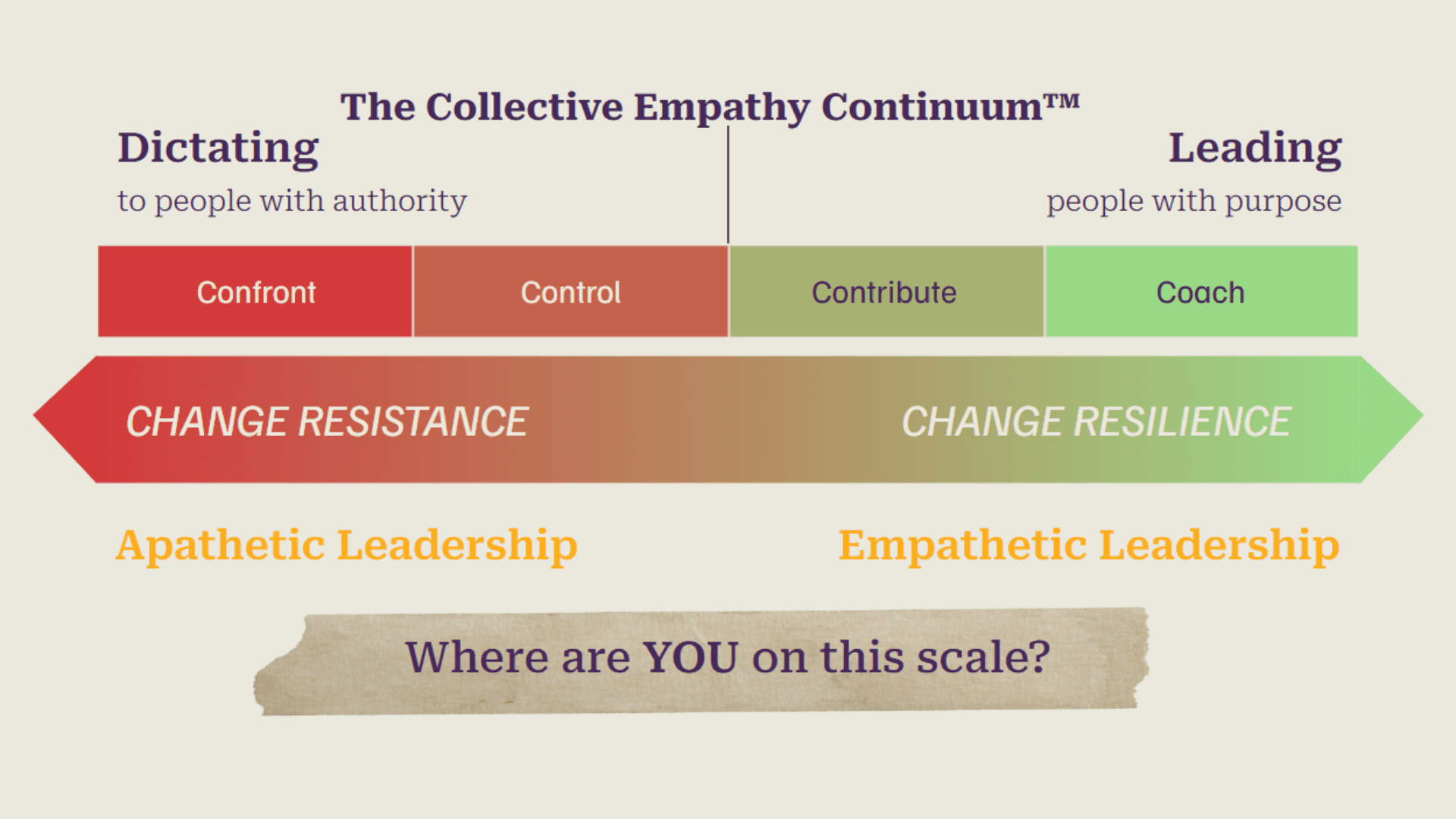
Resilience starts with Collective Empathy
Where does your organization fall on this continuum? Are you struggling with change resistance and low engagement? Or are you already reaping the benefits of a high-empathy culture?
The Bottom Line
Building a collectively empathetic organization is not a quick fix. It requires a long-term commitment to creating a culture of trust, respect, and shared purpose. But the rewards are worthwhile. By prioritizing the well-being and growth of your team, you’ll not only improve employee engagement and retention, but also increase your organization’s agility and resilience in the face of change.
What are your thoughts on collective empathy and its role in organizational change? Share your insights in the comments below.
References:
6 Reasons Why Change Initiatives Fail and How to Avoid Them; Prosci; 1 Aug 2024.
Pulse of Change Research Report; Accenture; November 2024.
Employees are Losing Patience with Change Initiatives; Harvard Business Review; 9 May 2023.
The Great Detachment: Why Employees Feel Stuck; Gallup; 3 Dec 2024.
Ignore the Human Side of Change - If You Want to Fail; Forbes; 26 Oct 2021.